Pujoy chai notun juto *
"Sasthi te ekta notun jama porish ontoto"**, my Mom tells me over the phone. And like always I assure her that I will. And even though I do not have the five days of Pujo to adorn myself in new sarees and jewellery, I will still wear a new t-shirt over my old and faded jeans when I go to work tomorrow. After all it is Sasthi. The first day of Pujo.
And much has been said about Pujo. The concept of Pujo, Pujo in Calcutta, Pujo overseas (probasi Pujo), missing Pujo, adapting to Pujo abroad, et cetera, et cetera, et cetera. And this year I wanted to make it a point not to lament about not being able to be in Calcutta during Pujo. Because over the years it is a fact that I have accepted. And honestly, I am in much better shape now than I was, when I first came to the US and had my first ever Pujo away from Kolkata. Back then one had to scour the internet for one brief image of Pujo back home. And now you do a search on google for Durga pujo and you can come up with a zillion links complete with images of pandals and Thakur and the latest information from Calcutta. If the internet has made the world smaller, then it has brought Pujo right to my doorstep.
So what do I miss so much about Pujo? The much anticipated dressing up in new clothes bit. The pre-Pujo excitement of shopping for clothes, for shoes that match the clothes, for jewellery that accessorize the outfit, hours of beating the crowds, braving the heat and the humidity, in the endless search for that elusive unique dress. When I was a kid we used to have our clothes tailored a month in advance. I remember those days when we would pour over catalogs picking out a style, a particular dress that caught our fancy and get the tailor to whip up something similar. Then there would be a day set out for fitting and trial, to have last minute adjustments, a nip here and a tuck there. And every year there would be a new fashion. If this year dhoti salwars were the rage, then the following year drain pipe churidars would reign. It was a constant dilemma trying to decide whether the dupatta would hang down the side over one shoulder or whether to have it draped across the nape of the neck. Whether the length of the kameez should come down to below the knees or stay halfway across the thigh. If ankle boots were cool or slingbacks were cooler. Whether we should get jewellery that was terracotta or ones that were oxidized metal. So much to choose from. And such important life decisions. Because there lay a thin line between being cool and being an outcast. And nobody wanted to tread the path of the uncool.
So we fretted and fumed and spent hours deciding, laying out outfits, planning out each day to the last detail. I would pick clothes based on what I had planned for the day. A day spent with friends walking from one pandal to the next across a few hundred miles meant comfortable shoes. So high heels have to wait for the day I spend sitting it out in Maddox square checking out other people. But then again, cannot get my heels all messed up in the mud that will be there in the park after a thunderstorm that almost washes out plans for the Pujo. Okay so the heels have to wait for the day when I go out for dinner with the folks. And then of course there is always the last minute change in plans. When your friend tells you that she will be wearing a saree for Ashtami's anjali, you have to cajole Mom into letting you wear her laal paar tangail so that you can be all grown up too.
Yeah, I miss all that action. The ladies fighting each other at Manohar trying to get their saree blouses ready before Pujo, people stomping over each other as they try to grab the tangail from Basak, the Puja sales and the mad shopping. I miss having ten different outfits to choose from. I miss having to decide between shoes and accessories. I miss having a hundred different things to do and a million places to go to during Pujo. I miss being in Calcutta during Pujo.
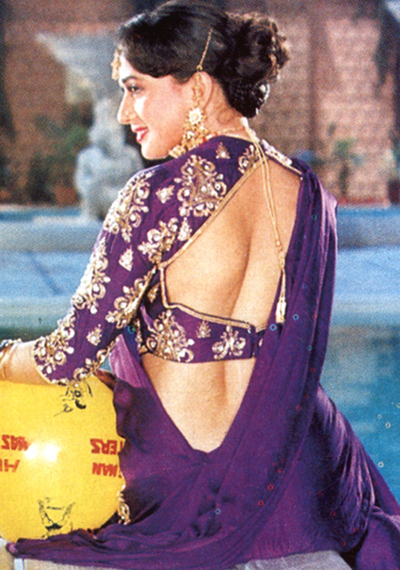
So now I make my own Pujo. There's no mad scramble for the perfect outfit, no crazy shopping, no interest in keeping up with the fashion. And I don't need a Hum Aapke Hain Kaun blouse to make it big on Ashtami evening. And I don't need to worry about my hemline. I can get by with what I have. But I still fret over what to wear on the two days that we celebrate Pujo in the US. I still lay out all the sarees that I have as I try to decide between the blue Baluchari, the red Bomkai and the golden Kanjivaram. And I love spending hours trying to accessorize with the right jewellery. Because dressing up and feeling good is such an integral part of Pujo. And I wouldn't miss it for the world.
Sharad Shubhechha to everyone out there!
* Want new shoes for Pujo
** Atleast wear a new dress for Sasthi
And much has been said about Pujo. The concept of Pujo, Pujo in Calcutta, Pujo overseas (probasi Pujo), missing Pujo, adapting to Pujo abroad, et cetera, et cetera, et cetera. And this year I wanted to make it a point not to lament about not being able to be in Calcutta during Pujo. Because over the years it is a fact that I have accepted. And honestly, I am in much better shape now than I was, when I first came to the US and had my first ever Pujo away from Kolkata. Back then one had to scour the internet for one brief image of Pujo back home. And now you do a search on google for Durga pujo and you can come up with a zillion links complete with images of pandals and Thakur and the latest information from Calcutta. If the internet has made the world smaller, then it has brought Pujo right to my doorstep.
So what do I miss so much about Pujo? The much anticipated dressing up in new clothes bit. The pre-Pujo excitement of shopping for clothes, for shoes that match the clothes, for jewellery that accessorize the outfit, hours of beating the crowds, braving the heat and the humidity, in the endless search for that elusive unique dress. When I was a kid we used to have our clothes tailored a month in advance. I remember those days when we would pour over catalogs picking out a style, a particular dress that caught our fancy and get the tailor to whip up something similar. Then there would be a day set out for fitting and trial, to have last minute adjustments, a nip here and a tuck there. And every year there would be a new fashion. If this year dhoti salwars were the rage, then the following year drain pipe churidars would reign. It was a constant dilemma trying to decide whether the dupatta would hang down the side over one shoulder or whether to have it draped across the nape of the neck. Whether the length of the kameez should come down to below the knees or stay halfway across the thigh. If ankle boots were cool or slingbacks were cooler. Whether we should get jewellery that was terracotta or ones that were oxidized metal. So much to choose from. And such important life decisions. Because there lay a thin line between being cool and being an outcast. And nobody wanted to tread the path of the uncool.
So we fretted and fumed and spent hours deciding, laying out outfits, planning out each day to the last detail. I would pick clothes based on what I had planned for the day. A day spent with friends walking from one pandal to the next across a few hundred miles meant comfortable shoes. So high heels have to wait for the day I spend sitting it out in Maddox square checking out other people. But then again, cannot get my heels all messed up in the mud that will be there in the park after a thunderstorm that almost washes out plans for the Pujo. Okay so the heels have to wait for the day when I go out for dinner with the folks. And then of course there is always the last minute change in plans. When your friend tells you that she will be wearing a saree for Ashtami's anjali, you have to cajole Mom into letting you wear her laal paar tangail so that you can be all grown up too.
Yeah, I miss all that action. The ladies fighting each other at Manohar trying to get their saree blouses ready before Pujo, people stomping over each other as they try to grab the tangail from Basak, the Puja sales and the mad shopping. I miss having ten different outfits to choose from. I miss having to decide between shoes and accessories. I miss having a hundred different things to do and a million places to go to during Pujo. I miss being in Calcutta during Pujo.
So now I make my own Pujo. There's no mad scramble for the perfect outfit, no crazy shopping, no interest in keeping up with the fashion. And I don't need a Hum Aapke Hain Kaun blouse to make it big on Ashtami evening. And I don't need to worry about my hemline. I can get by with what I have. But I still fret over what to wear on the two days that we celebrate Pujo in the US. I still lay out all the sarees that I have as I try to decide between the blue Baluchari, the red Bomkai and the golden Kanjivaram. And I love spending hours trying to accessorize with the right jewellery. Because dressing up and feeling good is such an integral part of Pujo. And I wouldn't miss it for the world.
Sharad Shubhechha to everyone out there!
* Want new shoes for Pujo
** Atleast wear a new dress for Sasthi
posted by M (tread softly upon) at 11:33 AM
38 comments