Wednesday, September 27, 2006

Pujoy chai notun juto *

"Sasthi te ekta notun jama porish ontoto"**, my Mom tells me over the phone. And like always I assure her that I will. And even though I do not have the five days of Pujo to adorn myself in new sarees and jewellery, I will still wear a new t-shirt over my old and faded jeans when I go to work tomorrow. After all it is Sasthi. The first day of Pujo.

And much has been said about Pujo. The concept of Pujo, Pujo in Calcutta, Pujo overseas (probasi Pujo), missing Pujo, adapting to Pujo abroad, et cetera, et cetera, et cetera. And this year I wanted to make it a point not to lament about not being able to be in Calcutta during Pujo. Because over the years it is a fact that I have accepted. And honestly, I am in much better shape now than I was, when I first came to the US and had my first ever Pujo away from Kolkata. Back then one had to scour the internet for one brief image of Pujo back home. And now you do a search on google for Durga pujo and you can come up with a zillion links complete with images of pandals and Thakur and the latest information from Calcutta. If the internet has made the world smaller, then it has brought Pujo right to my doorstep.

So what do I miss so much about Pujo? The much anticipated dressing up in new clothes bit. The pre-Pujo excitement of shopping for clothes, for shoes that match the clothes, for jewellery that accessorize the outfit, hours of beating the crowds, braving the heat and the humidity, in the endless search for that elusive unique dress. When I was a kid we used to have our clothes tailored a month in advance. I remember those days when we would pour over catalogs picking out a style, a particular dress that caught our fancy and get the tailor to whip up something similar. Then there would be a day set out for fitting and trial, to have last minute adjustments, a nip here and a tuck there. And every year there would be a new fashion. If this year dhoti salwars were the rage, then the following year drain pipe churidars would reign. It was a constant dilemma trying to decide whether the dupatta would hang down the side over one shoulder or whether to have it draped across the nape of the neck. Whether the length of the kameez should come down to below the knees or stay halfway across the thigh. If ankle boots were cool or slingbacks were cooler. Whether we should get jewellery that was terracotta or ones that were oxidized metal. So much to choose from. And such important life decisions. Because there lay a thin line between being cool and being an outcast. And nobody wanted to tread the path of the uncool.

So we fretted and fumed and spent hours deciding, laying out outfits, planning out each day to the last detail. I would pick clothes based on what I had planned for the day. A day spent with friends walking from one pandal to the next across a few hundred miles meant comfortable shoes. So high heels have to wait for the day I spend sitting it out in Maddox square checking out other people. But then again, cannot get my heels all messed up in the mud that will be there in the park after a thunderstorm that almost washes out plans for the Pujo. Okay so the heels have to wait for the day when I go out for dinner with the folks. And then of course there is always the last minute change in plans. When your friend tells you that she will be wearing a saree for Ashtami's anjali, you have to cajole Mom into letting you wear her laal paar tangail so that you can be all grown up too.

Yeah, I miss all that action. The ladies fighting each other at Manohar trying to get their saree blouses ready before Pujo, people stomping over each other as they try to grab the tangail from Basak, the Puja sales and the mad shopping. I miss having ten different outfits to choose from. I miss having to decide between shoes and accessories. I miss having a hundred different things to do and a million places to go to during Pujo. I miss being in Calcutta during Pujo.

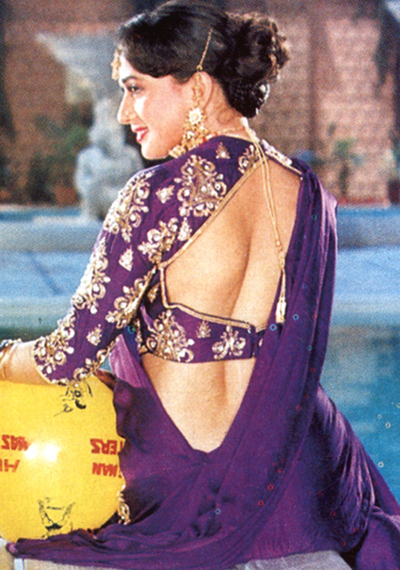
So now I make my own Pujo. There's no mad scramble for the perfect outfit, no crazy shopping, no interest in keeping up with the fashion. And I don't need a Hum Aapke Hain Kaun blouse to make it big on Ashtami evening. And I don't need to worry about my hemline. I can get by with what I have. But I still fret over what to wear on the two days that we celebrate Pujo in the US. I still lay out all the sarees that I have as I try to decide between the blue Baluchari, the red Bomkai and the golden Kanjivaram. And I love spending hours trying to accessorize with the right jewellery. Because dressing up and feeling good is such an integral part of Pujo. And I wouldn't miss it for the world.

Sharad Shubhechha to everyone out there!

* Want new shoes for Pujo
** Atleast wear a new dress for Sasthi

Labels: , ,

Thursday, September 07, 2006

How green was my valley....

I was looking at some photos my cousin sent me from his recent trip to Calcutta. Photos of the city, of the people I love and grew up with, of places and times that I left behind when I came to the US. And as I went through photo after photo of known places and loved ones I was gripped with pain and sadness. It appeared to me that every little thing I knew and remembered was changed and different now. The city looked old and dirty, the people looked tired and aged. And nothing seemed to be the same anymore. And suddenly I realized as a sharp pang of regret shot through me that the only thing that was probably changed and different was me and how I viewed things now. And I wept. For times that were gone and lost. For family that I had moved away from. For days that I had spent growing up loving a place, missing it every single day, only to realize how distant I had become and how things were not the same anymore.

I left Calcutta with happy memories of my childhood. Of growing up basking in the love and affection of an extended family. Of sunny days and warm memories. Wild adolescence and much awaited adulthood. The joy of being able to do everything I wanted to, of being anyone I wanted to be. Of learning, maturing and being who I am. That is what I hold in my heart. That is what makes me smile everytime I remember home. When I think of Pujo. Poila Baisakh, Christmas, Bhai phonta.

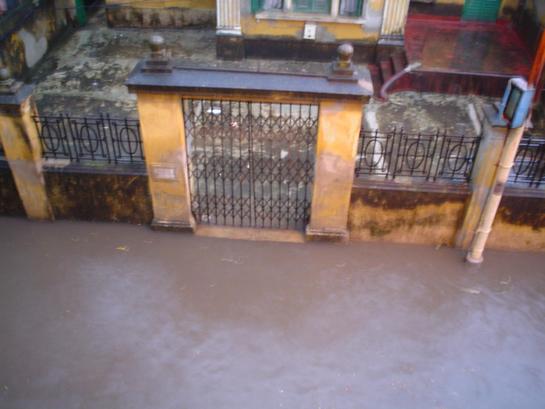
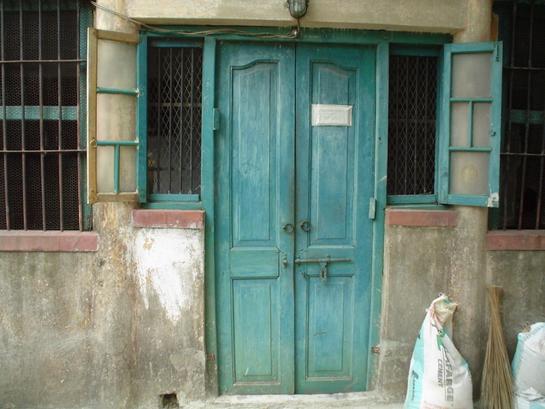
And then yesterday happened. I saw the photos my cousin sent me. Photos that he had taken from the balcony of our house. Photos he had taken of familiar places. Of that shop down the road where we would buy stationery from. Or the library where we would get books from. The dhobi who ironed our clothes. The bus stop where we would wait endlessly in the scorching sun. The uthon-bari where we would play kumir-danga all afternoon. And they all looked so different. Everything looked old and moss-covered and like they had been picked out of some ancient bangla movie (see below views from the balcony and a house down the street). Like it was some suburban township in the middle of nowhere. Yet this was very much Calcutta. In the heart of the metropolis. There was a picture of a waterlogged street (see below). Something I had never bothered much when I was there. But now it bothers me. Why, oh why?


I looked into the faces of my uncles, my aunts, my grandparents, family friends. And everyone looked so much older than I remembered them. It was such a rude awakening. It felt like I was stuck in time and everything else had moved on without me, aging and withering away. It made me cry.

My Dad tells me that Calcutta has improved over the last few years. There are flyovers and less traffic jams, spanking new shopping malls and multiplex theatres. The city is cleaner and better. And I am sure it is all true. But why do I not see it in the places I love and want to remember that way? Why is the street still waterlogged after a shower? Why is the uthon bari not painted or the dhobi shop not fixed up? Why does looking at the photos after all these years make me want to cry? For myself. For having changed. And for finding everything else changed. I wish I had an answer.

Labels: , ,

Friday, July 28, 2006

Going home

There is something that all desis really enjoy doing. That is going back home on vacation. One could be living in India in a different city or even outside the country, but home is where one grew up and left behind all the memories (and sometimes family and friends). And like all desis I really look forward to going home on vacation. Except years of living away from home changes you in so many little ways, that it hits you hard the moment you step out of your familiar everyday turf.

The flight:

For example take the flight back home. We decide that we will catch up on sleep to compensate for the last couple of sleepless nights, when we were busy tying loose ends and trying to finish our packing. But just as I begin to make myself comfortable in the cramped space of the airplane seat, the person right next to me (who by the way is always an elderly, somebody's parent kind) decides to investigate a little into my background, which part of India I hail from, who I am visiting and for how long, what kind of job I have, how much I earn, what caste I belong to, whether I am married and for how long (quick check into B and whether it is a good match), if I have kids and the reason for not having them yet, making me wish that I hadn't agreed to taking the middle seat while letting B sit in the aisle. By the time I am through hearing all about the various accomplishments of my co-passenger's son and daughter, and can give the IRS an accurate account of their finances, B is snoring, making any attempts at sleep quite impossible. But I still try. God knows how much I need this rest since the trip back home will be one of whirlwind activity with very little time for rest. And just when I think that there is a God and I am drifting off into a tranquil slumber, someone prods me in the ribs, almost making me jump out of my seat. It's my co-passenger. Well of course it is.

"Beta could you let me out. Bathroom jana hain."

Apparently God has a peculiar sense of humor and He's going to prove it to me through the duration of this flight.

Strangely enough I survive the flight. In fact I even catch an hour of sleep right before the plane lands in Bombay. When I wake up I'm sure there must be some kind of mistake. It appears like I've been transported into a different flight while I was napping. Where did all the passengers go? I mean the ones that boarded the flight with us. I could have sworn atleast half the flight comprised of bright young women dressed in the same way I was. Yet now in the brief span that I was guilty of sleeping, these women had magically transformed their jeans and T-shirts into beautiful ethnic garb of sarees and salwars, complete with jewelry and bindis. It is mindboggling to say the least.

First impressions:

So we get off the flight. The first thing that hits us (literally) is a blast of warm humid air that is stifling and leaves us gasping for some oxygen. It's like you're way up on some mountain where the air is very thin and you cannot breathe unless you make a laborious effort. Or when one steps inside one of those 37 degree rooms that we use for growing cell cultures and not being able to leave. By the time our body acclimatizes to the sudden increase in heat and humidity I become aware of my shirt suddenly sticking to my body. Suddenly everything is icky and sticky and I can smell the person standing next to me. That smell which I had almost forgotten, of stale body odor, sweat and unwashed shirts. Almost forgotten.

We get through customs. And I sort of start getting used to the throngs of people pushing and jostling each other. I almost begin to enjoy myself. I'm home. Back where I belong. I can identify with these people. Minus the body odor. And the pushing. The next thing I know there's three different men trying their best to wrestle my cart away from me. As I try to stop them from robbing me of my possessions I realize all they are trying to do is transfer my luggage into the bus that will take me to the domestic airport. Welcome home. Where people can be paid to do your physical labor. I take a ten rupee note from my purse, only to find the guy shaking his head and saying,

"No, no. No Indian rupees. Only dollars".

I can barely believe what I am hearing. I let B handle the situation. But I don't think he fares any better. We tell ourselves that we are in India now and we have to get used to the haggling and bargaining and the people taking advantage of you bit.

So now we are waiting at the airport for our connecting flight to Calcutta. And I'm dying of thirst. I tell B that we have to careful about drinking water and he is to buy bottled water to keep us from having cholera (which is what I've been told since I was a little girl). We see a guy selling bottled water and we get one. The price: Rs 30 (which I discovered later was supposed to be Rs 10). We drink it and comment on how bad the water tastes. Sort of metallic and salty. And then we see it. There's this place for drinking water. A mammoth sink with a dozen taps where people are drinking water straight out of the tap. And our man is filling a couple of dozen Bisleri bottles with the tap water. And then I knew. I had just paid thrice the amount to buy a bottle of tap water. And just put ourselves in way of coming down with cholera. Needless to say I didn't drink another drop of water, bottled or not, until I reached the safety of our home.

The flight to Calcutta is wonderful. They offer us three choices for breakfast. Three choices! I mean, I am so used to having a miniscule pack of pretzels thrown at me on the domestic flights in the US, that having to choose between continental, South Indian sambhar and idli and North Indian paratha and sabzi has me all confused and worked up. It was just beautiful. We were home and it looked like it would be a beautiful day.

We arrive in Calcutta amidst a whole troop of relatives that had descended upon the Dumdum airport to greet us. Thank God none of them had bouquets of flowers or garlands, unlike some of the others who were there to welcome home their prodigal child. The drive back home was traumatic. Cars zip past us without any regard for oncoming traffic. I couldn't bear to look out the window for fear of shrieking every second. By some miracle we reach home without crashing into another car, man or animal and without having anything crash into us.

Home:

Okay so I don't get to go home (as in my home) right away. Well you see I got married before I came to the US and my rightful place in India is my shoshurbari (sasural/ in-laws place). So I bear through the next couple of hours while we shower and eat and unpack the chocolates (before they melt completely) and stash them in the fridge. Then we are allowed to go home. My home. I immediately go on this exploratory tour of the house. Checking out each room to see if things have changed. Everything looks different. Different curtains, new furniture, strange bedspread. And everytime I go, "hey that's new", someone informs me that it has been changed three years back, reminding me that may be the only thing new there was me.

Sights and sounds and the smells:

We both lose our voices within two days of landing in Calcutta. Everyone tells me it is the pollution that chokes your voice. So we have to resort to hoarse whispering and a great deal of nodding and shaking of the head. And even though there really isn't too much of jetlag for some reason I always feel exhausted. May be it is the sheer strain of having to travel through such chaotic traffic, blaring horns, throngs of suicidal people who prefer to walk on the road than on the sidewalk, the heat and humidity and the constant exhaust from cars and buses that cling to the air and choke your insides. I suddenly become aware of a hundred different sounds that are around me at any given time. Sounds that I had started to forget. Almost. Like the cacophony of cars honking, as they honk on every corner before they make a turn just to let you know that they are approaching. Or the guy with the metal bucket who washes our car every morning and makes sure he lets everyone know that he is doing his job. Or the people selling their wares on the street "Didi ekdom joler dorey" (as cheap as water). People are everywhere. Yelling, shouting, making themselves heard. And the smells. Of rotting garbage. Of clogged waste-water drains. Of smoke and motor exhaust. And amidst that, of tempting street food. Of rolls and telebhaja (fritters). Of peanuts being dry roasted. Of deep fried shingara and spicy chowmein.

How the West changes us:

Well we try to claim that things haven't changed much and we're pretty much the same folks who left the country a few years back. But somehow we've changed. In subtle ways. Like now I have an accent. I swear I didn't try to acquire one. It just crept in on me. May be when I was teaching undergrads in the University. May be when I was just trying to fit in. And now......it's just a part of me. And people look at you funny when you open your mouth. Like you don't belong there anymore. And I guess we even get a certain bideshi (foreign) aura about us which make hawkers run after us with handicraft items and try to bargain in broken english,
"Very good item sir/madam. You pay dollar?"
What is this obsession with dollars in India these days? So now we have two currencies doing the rounds? You can pay in rupees or in dollars?

And people stare. Unabashedly. You may be sitting in the privacy of your car and stopped at a traffic light. While the person in the car right next to yours will be looking into your car and just staring at you like you were from a different planet. Staring is not considered rude. And meddling in other people's affairs is normal.

The other thing that bothers me is our expectation of getting a job done on time. Like when I went to the bank to withdraw money from my account and expected it to be a real swift operation. After all it is my money and I have every right to take whatever I want from my account. But that wasn't meant to happen. Because they had to verify my signature which by the way has evolved a great deal since my signing days in India. When that posed problems they needed further identification, things like passport which I had to go home to fetch. And then there was this business of passbook and updating the information in that. And I get shuttled from one counter to another, one where they fill out the form that expresses the desire to withdraw money, to another where they review it and give you a little note that you take to a third counter where they give you the money but make you go back to pick up your passbook from the first counter. And all this while I am missing my ATM back in the US. Missing it bad.

Or the time when I walk into a store that sells kurtas for men. (Kimbadanti for those of you who'd really like to know.) And it's a little weird because you have to tell the shopkeeper exactly what you are looking for and he will "show" you the items that he has stocked which meet your specifications. And I stand there patiently waiting to be "served" and the guy is merrily chatting with another guy who happens to own a shop next door. Now we are spoilt here in the US. We are told things like "the customer comes first" and the "customer is always right" and people who are selling always greet you with a smile, they ask you if you found everything okay and if there's anything they can help you find. There is something called 'customer service' and I love it. But it is sadly missing back home. And while we wait and wait with the expectation of being attended to, the shopkeeper could care less. And that I cannot take. Not anymore. So I walk out. Without having bought anything. And the shopkeeper really doesn't care. How crazy is that!


Getting used to it all:

Two weeks into your vacation your voice comes back miraculously. And you are less conscious about the stares. And you don't complain about the heat anymore. You fan yourself with a magazine while you sit it out in the traffic. You have resigned yourself to being in a constant state of diarrhea. And you are getting the hang of bargaining. In the shops, in taxis, everywhere. Like they say, it's only a matter of time.

And all too soon, it is over.

And before we know it we're on a flight back to the US. And we're on familiar ground. Where it is nice and clean and pretty, and people are smiling and polite and the non-staring kind, and lines move fast and things work with clockwork precision, where the roads are wide and the cars follow rules. And it all looks and smells so familiar. So predictable. And there's no acclimatizing, no getting used to anything. It's like we never left.

I feel a gush of emotion as I see my house. Exactly the way I left it. I go in and check on my plants. I go to every room and touch my things. Exactly where I left them when I went to India. And strangely it feels very comforting.

I whisper to myself, "Welcome home".

Labels: , , ,

Tuesday, July 11, 2006

In a land far far away

In light of what happened in Bombay yesterday I have been feeling esp. depressed. And missing home even more. I had started writing this post earlier.
This one is for everything India stands for. And how much it means to me.
Here's to the spirit and the resilience of my people.

I was talking to my friend the other day and he was questioning why most Indians tend to precipitate together at office parties and social gatherings. Oh yes, and I'm talking specifically about the Indians abroad who are away from their home. And it got me thinking. True I have friends who are not Indian, but a large chunk of my social circle comprises of Indians, and coming to think of it mostly Bongs. And I think I know why. It's the common ground that we share, of similar backgrounds, cultural bonding and understanding that can be traced back to our pre-immigrant days.

Every Indian I know here in the US misses home. India is a treasure chest of sepia-tinged memories and nostalgia. And at the slightest mention of old and fond things from back home the memories get rustled up and we gravitate towards strangers to catch up and talk about India. This is especially true if the people come from the same city. All the more fun as many more memories can be exchanged and shared. We can talk about schools and college experiences and the "do you know so-and-so" banter, resturants and places we used to hang out, how much things have changed and when was the last time we were visiting. The list goes on. So why do Indians precipitate? I guess because of the familiarity and easy identification with each other.

My Dad always said that the main reason he did not settle abroad and kind of rushed back to settle down in India before I started going to school was his fear of raising a daughter in a foreign place, in a culture that he was not comfortable with. And as a kid I envied my cousins who were growing up in UK and USA and hassled my parents for not giving me the chance to grow up and live abroad. But now after all these years I realize what a blessing it was to be able to grow up in a place among family and friends, living and learning about our cultural heritage and being able to identify with things that I would never have known otherwise.

There are things that I would laugh about when I was in India. You know the kind which one tries to deny when they are trying their best to emulate the West. Things that I did not realize the value or significance of, while I had them easily available. Things I could care less about back home in India. Yet now, with the whole uprooting and isolation in effect I have started realizing the importance of so many things. And I miss so much. So very much.

The rain. It rains a lot over here in Virginia. But somehow it doesn't have the same feel as a sudden summer norwester in Calcutta. The swiftness with which one takes shelter under the leaking roof of a roadside shop. And watch other people hurrying past with their wet umbrellas. And the water beginning to accumulate in huge puddles. And sloshing through the waterlogged streets in the uncomfortable Sandak sandals from Bata. God how I hated those shoes! But then nothing would convince me to soak my fancy leather sandals in the rain water.

And returning home to find hot tea and fried pakora. And may be khichuri for dinner.

Drinking tea from matir bhar (earthenware). This I especially associate with my college days when we would stop by a roadside stall after night-duty and drink tea from this enormous bhar. It was priced at Rs 5 which was a luxury considering a regular bhar of tea would cost less than a rupee. The tea tastes so different in a bhar. I think it takes on the smell of the earth which adds flavor.

Window shopping at Gariahat. Gushing over the gorgeous sarees that they would have on display at Trader's Assembly and Indian Silk House. And ending up buying earrings from the hawkers who traded on the streets.

Talking of sarees I think it is the most beautiful dress an Indian girl can wear. Almost every Indian female I know looks absolutely ravishing when they wrap a saree around them. I find it elegant as well as sexy. I had decided that once I got married I would only wear sarees and leave aside my usual wardrobe of jeans and skirts. And true to my word when I got married and came to the US my luggage did not contain anything but sarees and I spent the first few months going everywhere dressed in the traditional saree. We were living at that time in a really small town in the Midwest, a place which was primarily white American with a handful of foreigners. Needless to say I would be catching attention everywhere I went. People would wave at me and smile and stop to admire my "dress". It was a little awkward to be honest. Then I started to go to work and that required me to be dressed more appropriately and I had to go to the store to buy clothes more suited for the work environment here. I miss not being able to wear a saree.

Durga Pujo. Lal-paar saree. Sakha, paula, nowa (traditional bracelets of conch, coral and iron). Dhaak. Sandhi Pujo. Thakur baran. Well, can't say enough about Pujo in Calcutta. Therefore I'll leave it at that.

Lakshmi Pujo at home. Uposh (fast) and alpona (decorative motifs on the ground with rice flour). Alta pora ( I don't know what alta is but it is a red liquid which women in Bengal use to decorate the feet) and poribeshon kora (serving food).

Biye bari (weddings). Dressing up and looking out for eligible bachelors. Sticking together with friends and giggling at the slightest pretext. Staying up all night in the bashor, singing, dancing and eyeing the groom's goodlooking friend.

Rabindrasangeet. There was time when I found Rabindrasangeet monotonous and boring. But that was before I even started to realize that it went so much deeper than the melodies. Given the proper context they can drive me to tears these days.

Phuchka, jhaalmuri, alukabli. Egg-chicken roll. Mutton chop and fish fry. Chinese from Tangra. Biriyani from Shiraz. Momo at Elgin road. Kwality ice cream.

Bunking class to catch a matinee show at Nandan. Skipping the movie. Sitting aimlessly near the jheel. Adda.

Cricket at Eden Gardens, boat ride on the river, book-fair at the Maidan, circus at Park Circus, rowing in the Lake, books in college street, infusion at the coffee house, double-decker bus and trams. The sound of the conch-shell at dusk and women lighting diyas.

Inspite of the non-stop blaring of horns, incessant traffic that knows no rules, roads full of potholes, throngs of people that spill over into the streets, badly damaged sidewalks crowded by stalls, decaying rubbish piling high, homeless people in makeshift shelters, poverty and pollution, it is still home. These are still things we identify with, talk about and remember with some affection. We talk about Jyoti-babu and how communism has ruined the potential of Bengal for such a long time. We talk about Lalu and his regime in Bihar. We feel pride at all the technology and global advancement that India has made in the last decade. We seek out each other in lands far away from home. To talk. To bond. To feel at home.

Because our roots are still embedded over there.

That is where home is.

Labels: ,

Friday, October 07, 2005

Of kaashphool and Pujor gondho

‘Tis that time of the year. I can almost hear the “kashor-ghonta” (gongs and bells for the Bengali uninitiated folks), visualize the “Sarater aakash” (blue skies with wispy white clouds), and smell the happiness that is all pervasive. Yes, it is Pujo time and I would be amiss if I did not write something about my favorite time of the year to be in Calcutta.

So what is it about Durga Pujo that makes every Bengali nostalgic, happy and sad at the same time? Why do Bongs go crazy just thinking about Pujo? There’s a song that goes “Pujor gondho eshechhe….” That alone could sum up the kind of feeling that is associated with Pujo. And trust me, Pujor gondho is something that seems to be unheard of outside of Bengal. I mean we try to simulate the conditions, make do with every available resource and yet, there is always something missing. The core of Durga Pujo is the atmosphere, the throngs of people who make Durga Pujo so special.

The highly charged atmosphere that almost beckons you to be a part of it, live it, feel it and be one with the feeling. The countdown probably begins a month in advance when shops stay open till late at night to accommodate customers with their shopping after office hours. You have to get new clothes and shoes. And you buy for all your near and dear ones. That is Pujo. You share your happiness with your loved ones. And during those five days everyone is out on the streets wearing the latest in ethnic and western wear. And of course by evening there are hundreds of women limping along thanks to the blisters caused by the new sandal. It’s all an integral part of “Thakur dekha”. Starting from “Chakhu daan” on Shasthi to “Kola-bou snan” on Saptami, “Shondhi Pujo” on Astami to “raat jege Thakur dekha” on Nabami. And “Thakur baran” , “Shidur khela”, “mishti mukh” and “kolakuli” on Bijoya Dashami. And yes thinking of “kaash phool” and “Shiuli Phool” and “Dhaker awaj” and “Dhunuchi naach” brings a tear to my eye. And even as I thirstily search the internet for a glimpse of my favorite pandels and Thakur, it is not the same as walking the streets of Calcutta from Ekdalia Evergreen to Hindusthan park to Triangular park and Samaj Sebi, from 23 pally to Mudiali to Garia Naba Durga and spending hours at Maddox Square checking out the guys (and girls) and eating out every day and not having to work or study for those five days.

And for those who can read and understand Bengali it is all summed up in this verse that someone sent me. I would give credit if I knew who wrote it, but whoever did managed to say it all and more…..

pujo manei pujor kodin porasuno bandho
pujo manei satsakale seulifuler gandho
pujo manei sandhyebela thakur dekhar bhir
hoichoi r utsabete chardeek asthir.
pujo manei patsalate bajlo chutir ghonta
pujo elei chhelebelai paliye fere monta.
pujo manei ma duggar asur nidhon pala
anjali r prosad petam pujor dupurbela.
pujo manei notun jama notun notun saaj
alpona r thakurdalan daaker sajer kaaj
pujo manei pujosankhya didir sathe aari
didi akhon onek dure,didir swasurbari.
pujo manei mahalaya kashfule math sada
pujo mane aponjoner tane poruk badha.
pujo manei sagar pahar ekchhutetei pari
swapne kakhon pouche jetam meghbhasano bari
pujo mane dhaker baddi,pujor bisorjon
asche bachor abar eso monkharaper mon.
ajke pujo anyorokom annobhabe ase
bhorer bela sisir pore? seuli gandho bhase?
hoito ase!hoito sabai bodle gechi aaj
bohumulya samoy akhon sabar bhison kaaj.
bhalo theko bondhura sab bondhu thakuk mone
pujor dine chelebela abar poruk mone.

pujoi jodi thako tumi gharer theke dure
bare bare barir katha ase ghure phire
baje nako dhak ekhane bajenako shakh
suninako hajar loker basto hakdak
pujor dine aamar ar tomar mukh
buker moddhe gumre othe bhison kono dukh
jodi ami petam duto masto baro dana
ure jetam sunnopathe, thaktonako mana
kakhon je ma elo ar kakhon galo chole
hajar rakom kajer chape sabi gelam bhule
tobu tumi eso mago eso barbar
asbe tumi bhebei moder sab akakar.

Labels: , , ,

Tuesday, August 09, 2005

Early mornings and rowing

In the summer following my higher secondary exam and prior to starting classes in college I had a sudden desire to spruce up my sporty side and joined the rowing team at CRC. Now for those of you who are not aware of this, Calcutta has three real good rowing clubs near the Lake that were established in the late 1800's. My Dad was a member of the Calcutta Rowing Club (CRC) since I was a kid and I have the most fondest memories of beautiful evenings and Sunday lunches on the lush lawns. CRC was established in 1858 by the British and still maintains its original clubhouse and boathouse, and carries on the tradition of hosting regattas all year round. Right down the road are the two other rowing clubs, Lake Club and Bengal Rowing Club. A stiff competition exists between the rowing teams of all three rowing clubs.

When I joined the rowing team at CRC there were a handful of women who used to row. Most of the rowers were men. Now for those of you who are picturing me as one of those huge athletic rowers that you see in the Olympics let me clarify that I was one of the tiniest rowers on the Lake. At 5' 2" and 100lbs I did make a sorry picture with my oar in one hand and making my way down the ramp to the boat. The captain was a really nice man who believed that you required a complete workout before you could be let out on the boat. We would have to report at six in the morning and then go for a sprint around the Lake. Now one side of the Lake (the one next to Southern Avenue) is populated in the morning and makes for an interesting journey. However the other half is the not so desirable area and none of us were comfortable on that end. So what we used to do was instead of circling the Lake, we'd run up to the "Top" which was supposedly the half way mark and retrace our path back to the club. On our return we would have to do a series of free hand exercise before we earned the right to lay hands on the oar. Soon after I joined I discovered a friend in P. She was the same size as me and had just finished her class 12 boards and we became fast friends. We decided that the run up and down the Lake was time consuming and an exhausting affair. So we found a way of getting around it by taking a brief stroll by the Lake, then splashing ourselves with water so that it would look like we were all sweaty and tired from the running and rush off to the boathouse. I don't think the Captain ever found out!

We would always go out on the Junior fours with me sitting up in the Stroke position and P in the Bow with two other females which would depend on whoever was available. The most popular cox was Billu. Billu had a name which no one knew; everyone called him Billu. Billu was fun and would constantly chat and joke around with us. He would take us to the "Top" this time by water and then we'd go all the way down the Lake. It was invigorating and we'd come back tired but happy. The rule was once you returned to the ramp each team would have to lift the boat out of the water, flip it over so that the water would drip off, and lift it over their heads and carry it into the boat house. Considering my size I found that a real challenge and most of the time we would have to request the guys to lend us muscle power and get our boat back where it belonged. The person in charge of the boathouse would be most displeased and constantly told P and me that we would require more strength if we were to do this. But we got through the entire season by taking advantage of the guys.

The most exciting part were the few weeks before the regattas (which are these rowing championships held every year). We'd practice like crazy and fight over who gets on whose team and who gets Billu to cox the boat. We'd argue over who caught a "crab" and who could not set the rhythm. The main competition was between the teams of CRC, Lake and BRC. And since there were such few women rowers, we usually ended up winning a trophy. There would be a real official awards ceremony where the President of the Club would hand out the trophies and there would be a sumptous dinner and music later that night. It was fun, it was exhilarating, it was refreshing.

I stopped rowing soon after I started my first year classes. I still would go to CRC everytime there would be a regatta, if only to cheer the rowers from CRC. In fact there was this one time when the womens team could not participate because they were missing one member and I volunteered and we ended up winning the race! I haven't been to any of the regattas in many years now and I have totally lost touch with all my friends from the rowing days. But I hope that rowing remains in Calcutta and that every morning the lake still remains the battle ground of eager enthusiastic rowers who dream of winning the next trophy for their club.

Labels: ,

Tuesday, August 02, 2005

Of sleepy afternoons

Sunwashed mornings, rainy afternoons, magical evenings.....there's something about the place you grow up in, something warm and comforting that transcends all boundaries of geography and time, that makes you remember with fondness and longing.

For me Calcutta stopped in time 6 years back which is when I left the city. And with time I have learnt to selectively block all memories of the dirt, the pollution, the bandhs, the political bureaucracy. All I retain are the fond and warm memories of days I spent growing up there. For the most part of my childhood my idea of Calcutta centered around our house in Kalighat. So my world only stretched as far as Ballygunj (which is where my maternal grandparents lived), Jodhpur Park and Dhakuria (which is where my school was), and the Park Street-New Market area (which is where my Dad would take us shopping- this of course was in the pre AC market and other newer mall days). After I started going to college and learned to explore beyond the boundaries of home I got introduced to college street, park circus and moulali. I discovered the joy of watching back to back shows at Globe and New Empire while grabbing a chicken roll from Badshah. I learnt that you could go to Flury's and order a cold coffee and sit and read a book or talk to your friend for hours without anyone coming and asking you to leave. My orientation of Calcutta started to include places like Kasba, Behala, New Alipore, Kudghat, Ranikuthi, Golfgreen, Salt lake, Rajabajaar. I knew the place to have the first cup of morning tea was Maharani's on Lansdowne Road with accompanying jilipi and shingara; the phuchka would have to be from Vivekanada Park; I could compare between egg-chicken rolls from Campari- Bedouin- Hot Kathi.

For me Calcutta is all about the people: people who will give unsolicited attention and advise to you (the all familiar "ki holo dada, byapar ki?" which translated would be roughly a "what's up, dude?") and places: the early morning smog near the Dhakuria Lake, sweltering afternoons shopping at Gariahat, getting stuck inside an auto-rickshaw during a thunderstorm, going to the Boi mela (book fair) every single day, staying up 4 nights in a row at the Dover Lane Music conference, taking a boat ride from Outram Ghat, eating freshly roasted peanuts at Victoria Memorial, meeting a friend outside Symphony, drinking lassi at Rallis, staying up all night pandal hopping during Durga Pujo, watching the cricket match between India and Pakistan at the Eden Gardens, bunking class to catch a matinee at Nandan.....that is where Calcutta stopped for me and that is the flavor I carry in my heart when I leaf through the pages of my memory. That's what makes Calcutta special to me.

Labels: ,